+27822610542 | +27773573148 info@exploresa.org.za

THE OKAVANGO DELTA HAS BEEN REGISTERED AS A WORLD HERITAGE SITE BY UNESCO IN 2014 FOR ITS EXCEPTIONALLY INTACT WETLAND SYSTEM AND ITS RICH AND DIVERSE BIODIVERSITY.

However, the delta is mainly a geological phenomenon, and it should be recognized as an important geological feature. The climatic-hydrological system is a unique feature. The annual flood cycle which happens during the dry season in Botswana is critical to revitalization of the wetlands ecosystem.

The Okavango Delta is a vast wetland system with spectacular scenery and rich biodiversity, which includes the largest elephant population in Africa and serves as a core refuge of Africa’s mega-fauna. The Okavango Delta provides vital ecosystem services and is an important source of fresh water in a largely arid region.

AFRICA’S LARGEST INLAND ALLUVIAL FAN AND AN EXCEPTIONAL EXAMPLE OF THE INTERACTION BETWEEN CLIMATIC, HYDROLOGICAL AND BIOLOGICAL PROCESSES.
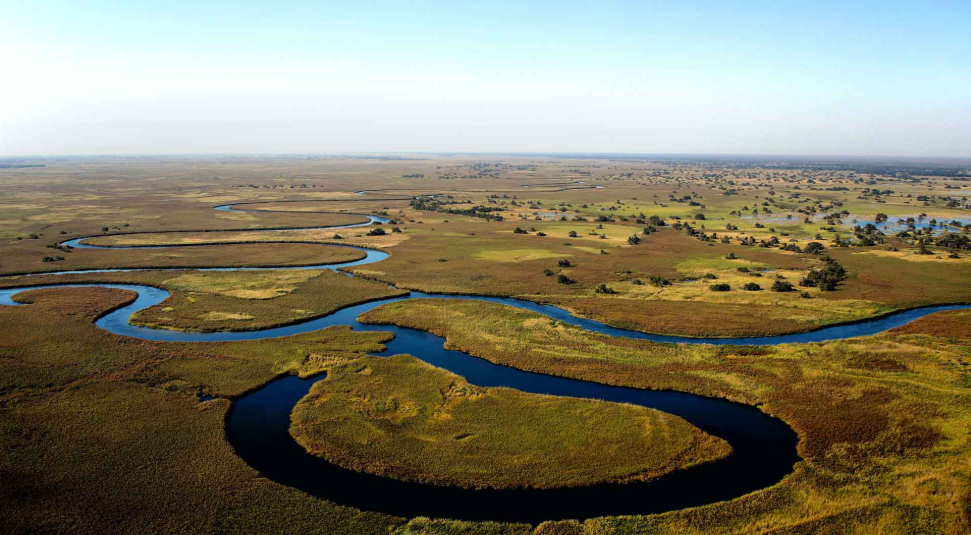
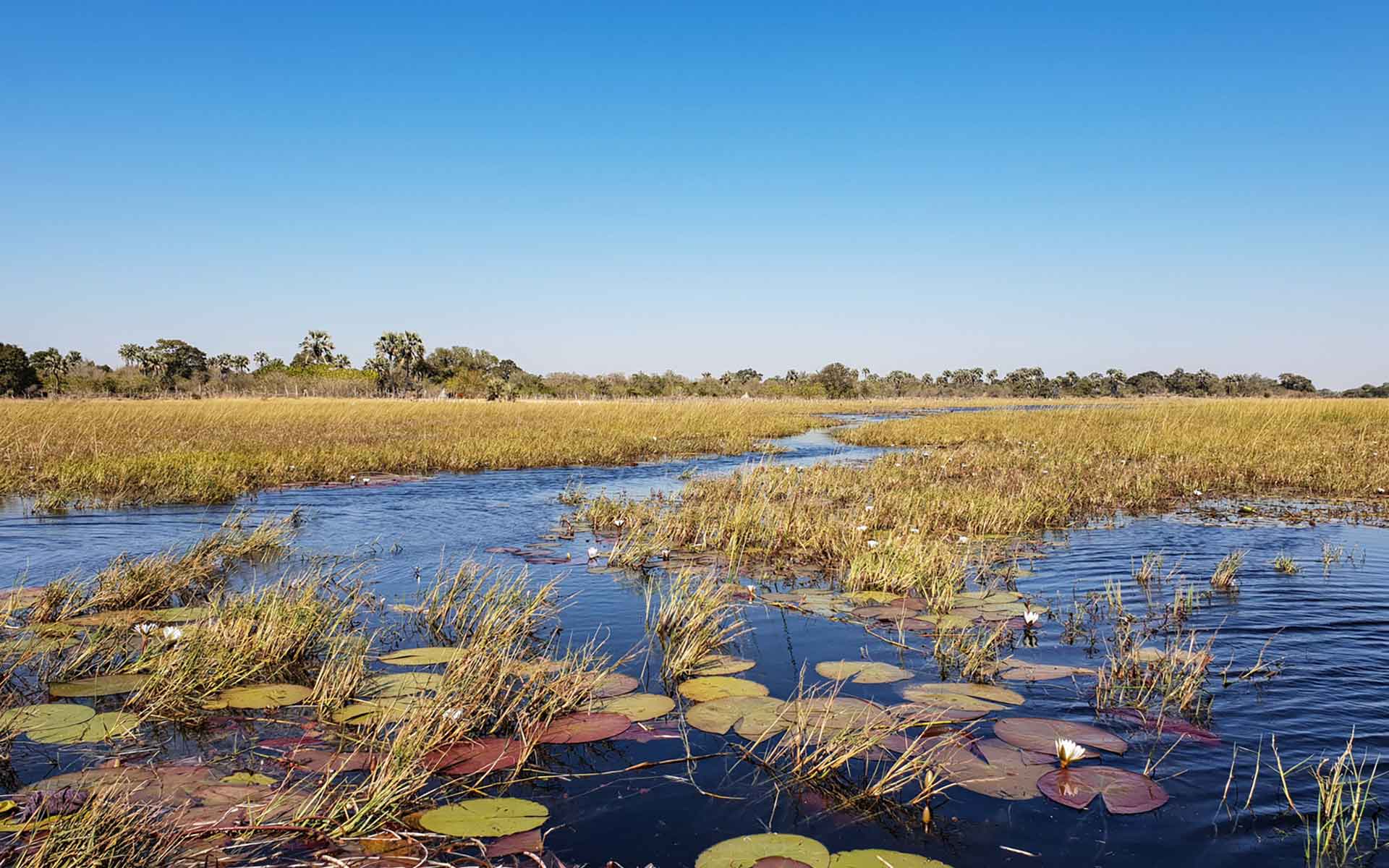
The Okavango River at its terminus, showing the ubiquitous fan grassland and water lilies on the shallow water (Photo credit: Asfawossen Asrat).

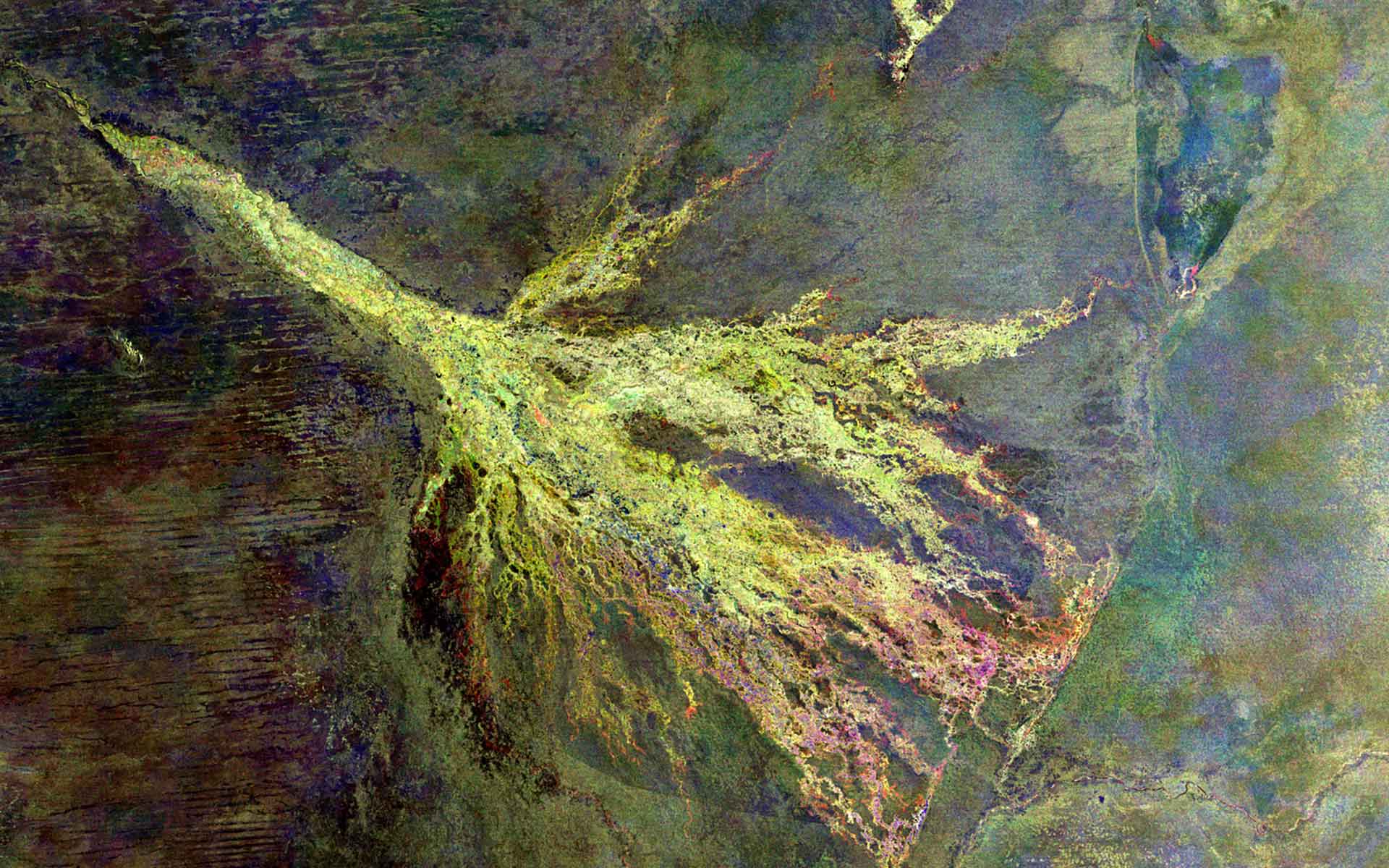
The Okavango Delta, situated in northern Botswana, is a large alluvial fan (40,000 km2 ) lying within grabens of the southern extension of the East African Rift system (Scholtz, 1975). The Okavango Delta is situated within two major grabens, one containing the Panhandle and the other the Delta itself (McCarthy et al., 1998). The delta is located at the terminus of the Okavango River and is a terminal depository for the Okavango River system, which drains central Angola (McCarthy and Metcalfe, 1990; McCarthy, 2013).

Topographic gradients on the fan are low, and at the fan the Okavango River forms a system of anastomosing channels flanked by perennial and seasonal swamps (McCarthy and Metcalfe, 1990). The river discharges about 10 km3 of water onto the fan each year, augmented by about 6 km3 of rainfall, which sustains about 2500 km2 of permanent wetland and up to 8000 km2 of seasonal wetland (McCarthy, 2006).

The Okavango is a large low gradient Inland delta and is Africa’s largest endorheic delta and the third biggest alluvial fan in Arica. It is largely untransformed wetland system, with uniquely adapted biota timed with the arrival of flood water in the dry, winter season of Botswana (World Heritage Nomination Dossier, 2013).

Scientific research and tradition

The Okavango Delta has been a subject of fascination since the 1920s. Serious scientific research on its geology and hydrology has been conducted since the 1980s, as can be evidenced by the rich scientific literature about the Delta.

13 + 1 =